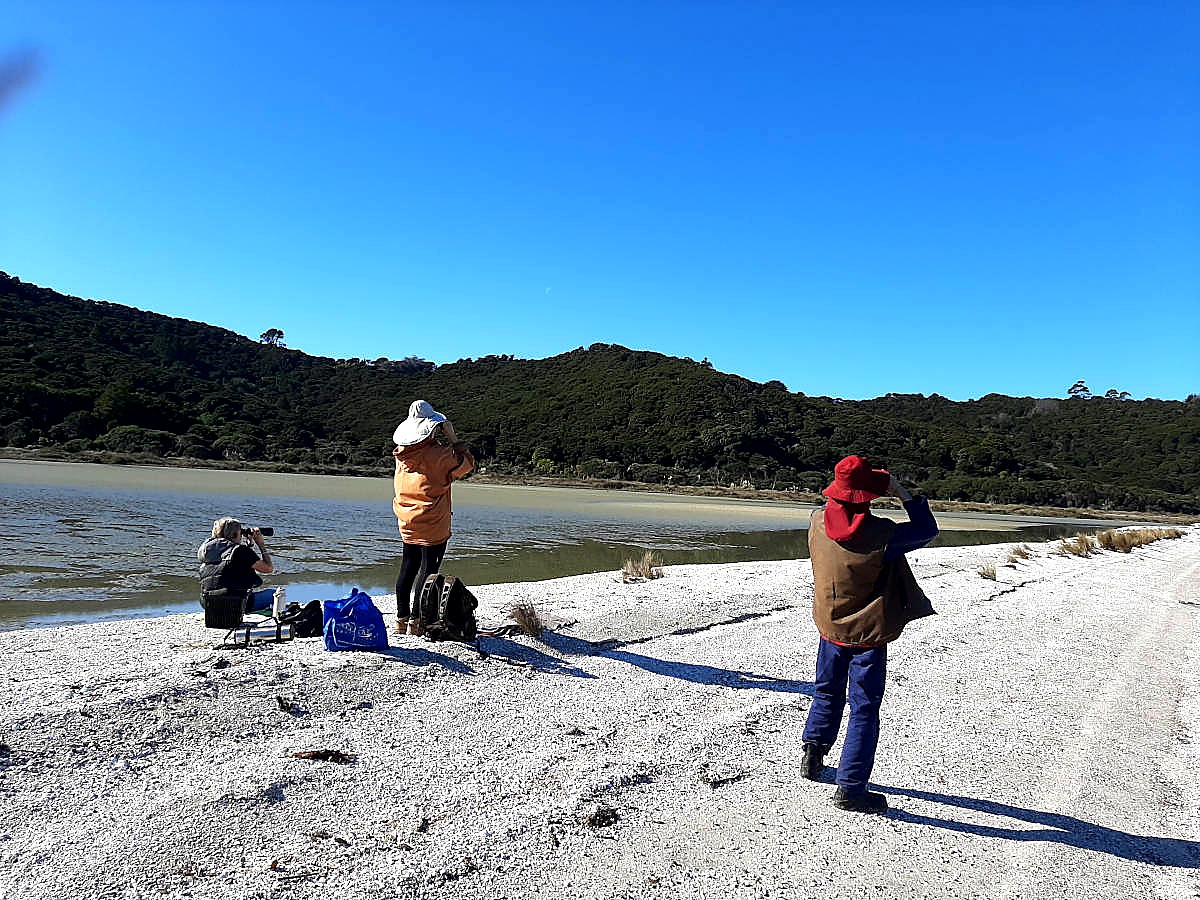
Join us for a morning on the shell spit — binoculars in hand, feet in the shells, eyes on the birds.
Once or twice a year Pouteria undertakes shorebird monitoring at Te Matuku Bay — one of the most significant shorebird habitats in the Hauraki Gulf. The shell spit and surrounding tidal flats host a remarkable diversity of native and migratory species, and keeping track of their numbers over time is an important part of understanding how the reserve is faring.
Each session is a half-day commitment, usually in December or January. We follow a standard shorebird monitoring protocol — you can read it on our blog: Shorebird Monitoring Protocol →
What to expect
You'll need to be reasonably fit and comfortable on uneven ground — the shell spit is beautiful but not smooth underfoot. Ideally you'll already be able to identify the main shorebird species found here:
- Tūturiwhatu (New Zealand dotterel) — nationally vulnerable, nests on the shell spit
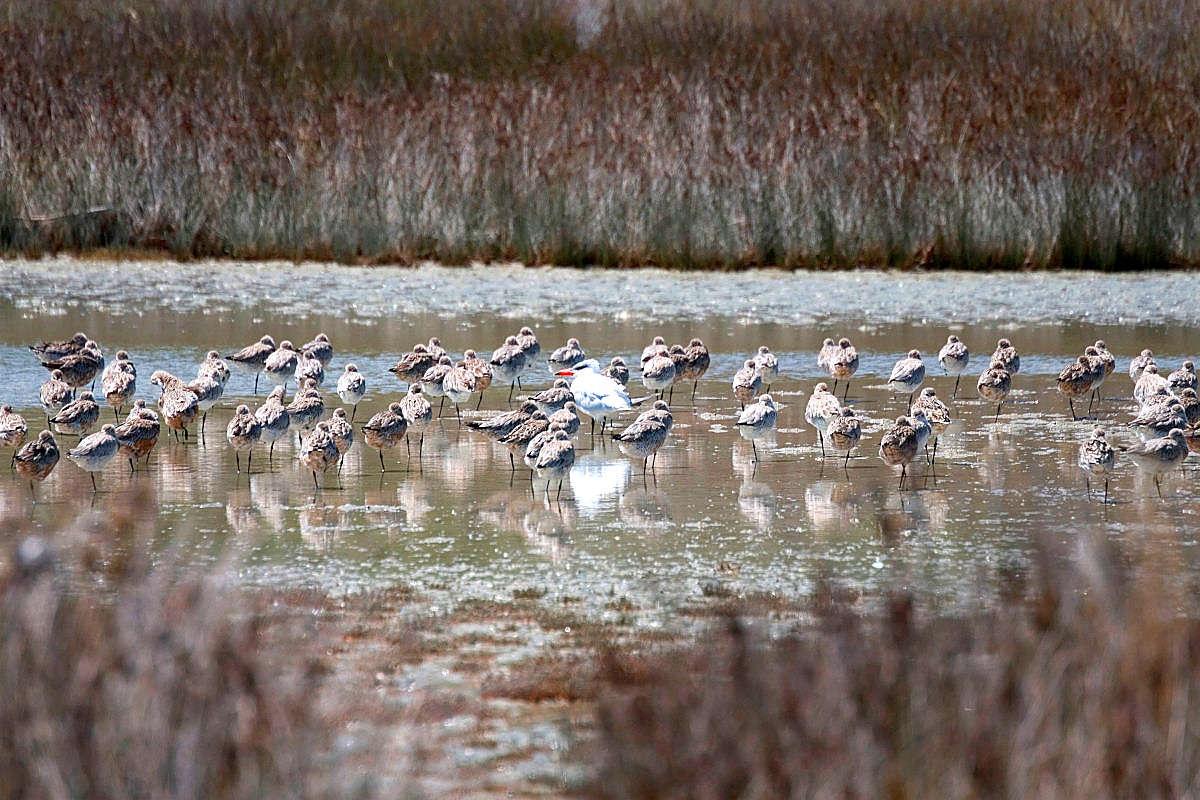
- Taranui (Caspian tern) — nationally vulnerable, a striking white and red-billed visitor
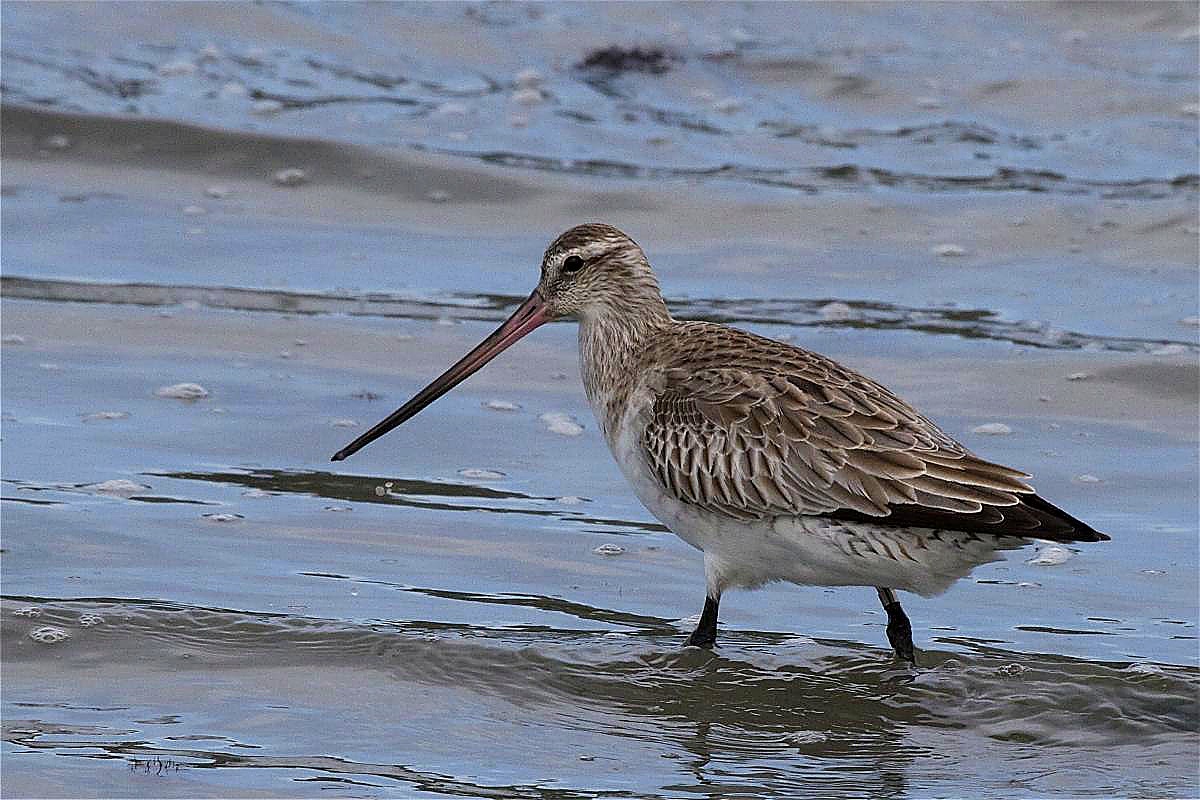
- Kuaka (bar-tailed godwit) — long-distance migrant from Alaska, overwinters at Te Matuku
- Tōrea pango (variable oystercatcher) — resident breeder on the shell barrier beaches
- Karuhiruhi (pied shag) — commonly seen fishing in the bay
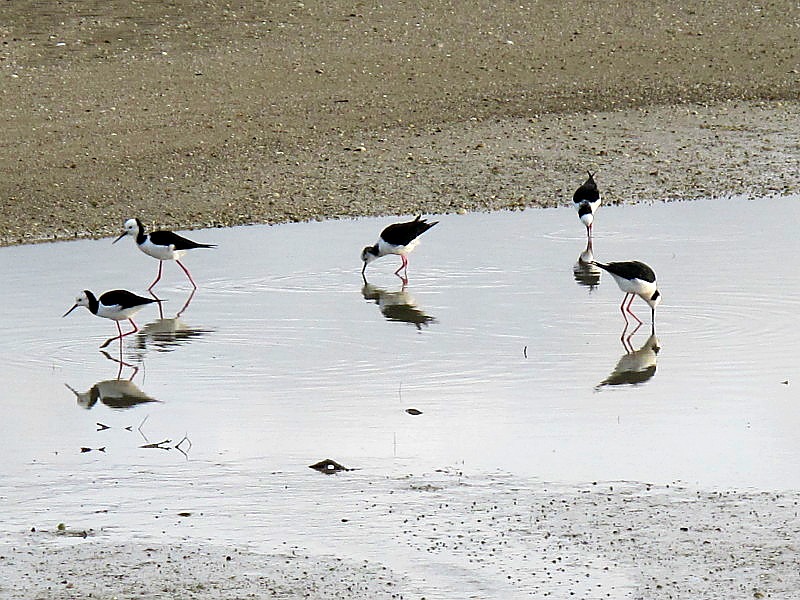
- Gulls, herons, stilts and more
Bring your own binoculars if you have them, and wear layers — mornings on the spit can be brisk. We follow a structured protocol so data is consistent across seasons and years.
Not just shorebirds…
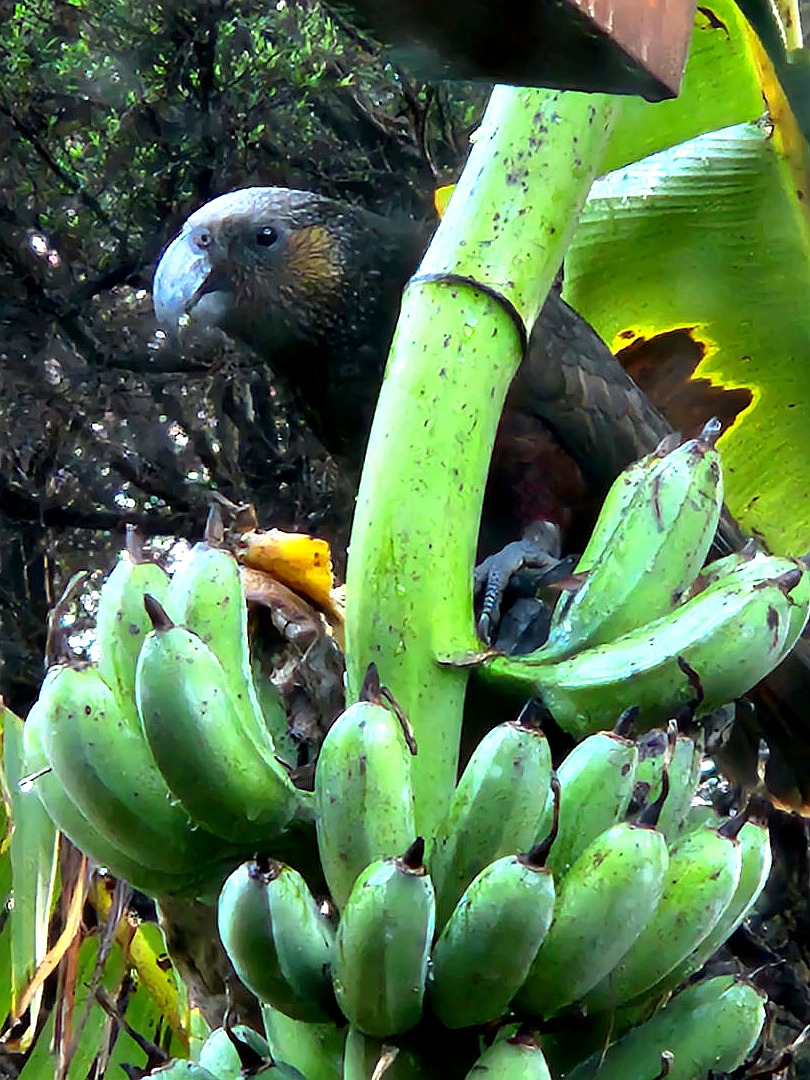
Te Matuku Bay is increasingly alive with forest birds too. Kākā — New Zealand's native bush parrot — are now regularly spotted in the environs, and this cheeky individual was photographed helping themselves to someone's banana crop. A sure sign the forest is coming back to life.
Check out more sightings on our blog under the tag "birds" or search "shorebird" in the search bar.
Apprentice Shorebird Monitoring Co-ordinator wanted!
We are looking for someone to train as our apprentice shorebird monitoring co-ordinator. We always aim to have multiple volunteers familiar with our protocol so we have good cover. If you have a passion for birds and would like to take on a meaningful role, we'd love to hear from you.